Multifamily development is one of the most powerful vehicles for long-term wealth creation — but only when it’s done right. In high-demand markets like Los Angeles and Orange County, the margin for error is razor-thin. Rising construction costs, complex entitlement processes, and intense competition for quality sites mean that developers who succeed are the ones who plan before they build.
Whether you’re launching your first apartment community or expanding an established portfolio, this guide covers every critical stage of the multifamily development process — from site selection and zoning to budgeting, design, construction, and contractor selection. And throughout each phase, Ironside Building, LLC is the full-service general contractor positioned to help you execute with confidence.
Setting Up a Successful Multifamily Project
Whether you’re developing a small apartment community, townhome development, or large-scale multifamily housing project, understanding the challenges and opportunities ahead can help position your project for success.
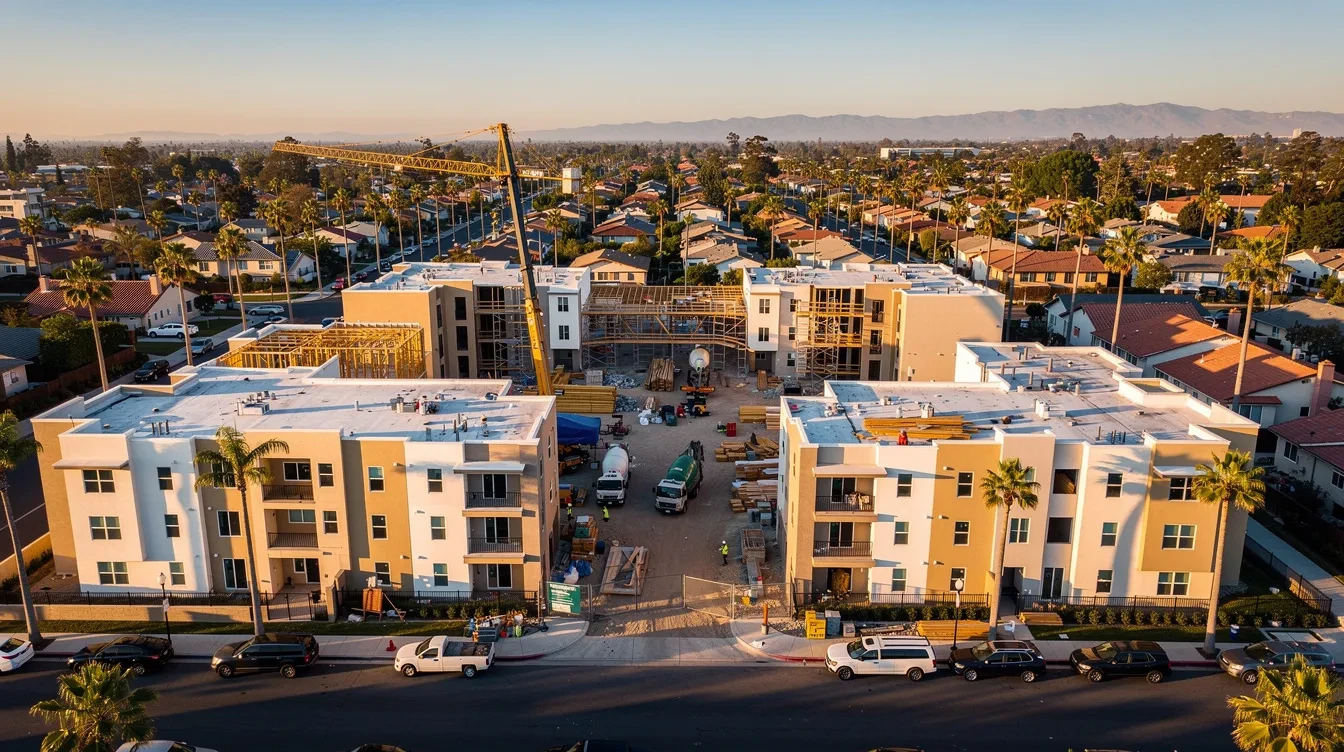
1. Define Your Multifamily Strategy Before You Buy
The single most expensive mistake in multifamily development is starting without a clear product strategy. Every downstream decision — unit mix, parking ratios, amenity packages, entitlement path, and proforma — flows directly from your vision. Get this right first.
Start by defining:
- Product type: Market-rate apartments, affordable housing, mixed-use with ground-floor retail, student housing near USC or UCLA, or senior living. Each carries its own design requirements, regulatory path, and cost profile.
- Unit mix: In transit-adjacent Los Angeles neighborhoods, studios and one-bedrooms often pencil better due to reduced parking requirements. In Orange County suburbs, two- and three-bedroom units attract family renters and drive stronger retention.
- Building scale: Low-rise multifamily (3–6 stories) and high-rise towers (12+ stories) have dramatically different cost structures. Know your target before schematic design begins.
- Investment targets: Set concrete benchmarks — IRR of 15–25%, cash-on-cash returns, an 18–24 month stabilization timeline, and a defined exit strategy (hold, sell, or refinance).
- Amenity package: Students, young professionals, families, and seniors expect different things. Design for your renter first.
Ironside Building collaborates with developers and architects during early planning to stress-test concepts against real construction budgets — before costly commitments are made.
2. Choose the Right Site and Conduct Due Diligence
Choosing the wrong site can undermine an otherwise strong portfolio. Acquiring the right site requires thorough planning and checks – and skipping steps here creates risks that compound throughout development.
Neighborhood fundamentals:
- Market studies should analyze local vacancy rates and rental rates per square foot. In Orange County, Q2 2025 vacancy sat at roughly 4.0% with average asking rent around $2,736 per unit, indicating strong demand.
- Evaluate demand drivers: proximity to universities, job centers, and transit corridors like Metro lines or OCTA routes. Transit proximity can support density bonuses or reduced parking requirements under programs like LA’s CHIP.
- Site plans show building placement and traffic flow arrangements – make sure the parcel geometry and access work for your intended product.
Physical and environmental conditions:
- Site acquisition involves evaluating location accessibility and zoning laws, but also topography, soils, and utility capacity. Infrastructure capacity impacts the feasibility of multifamily housing developments.
- Evaluate topography, soils, and utility capacity. Infrastructure limitations can fundamentally change project feasibility.
- Due diligence checks for environmental issues and land ownership are essential. Negotiating purchase terms includes price and conditions for closing, and final steps in site acquisition involve legal paperwork and surveys.
- Complete legal title review, surveys, and ownership verification before closing.
Coordinate early with a general contractor like Ironside Building for conceptual pricing based on specific parcel constraints before closing on land.
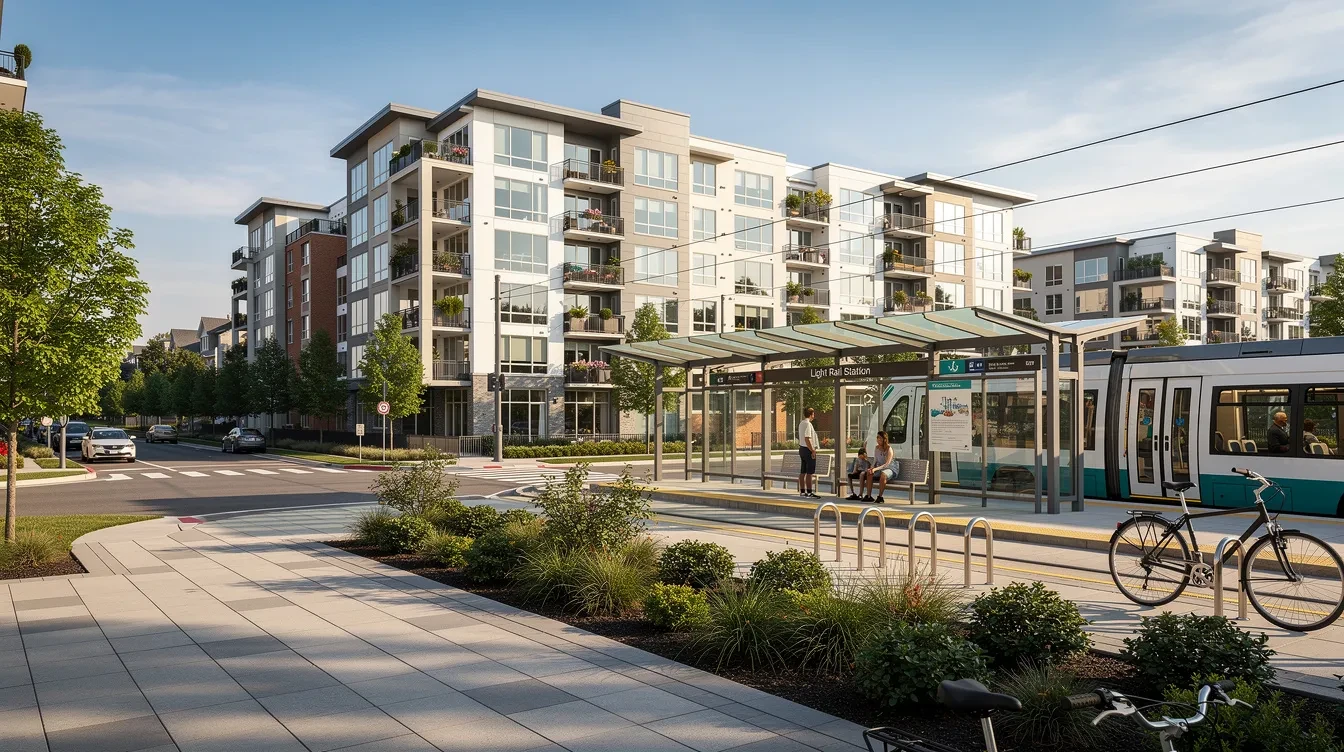
3. Zoning, Entitlements, and Permitting in Southern California
Zoning and entitlements in California often drive feasibility more than raw construction costs. Zoning compliance is crucial in starting any multifamily development project, and getting this wrong can stall a deal entirely.
Before going non-refundable on land:
- Confirm that existing zoning allows multifamily or mixed use, and verify height limits, FAR, density, and parking ratios. Zoning laws dictate land use for multifamily developments.
- Developers may need to change zoning if current rules don’t fit plans. Zone changes, variances, and conditional use permits can cost $10,000–$50,000 in consultants and fees alone.
- Building codes ensure safety and compliance in multifamily projects. Environmental regulations impact site development and construction practices.
Entitlement tools and timelines:
- California’s Density Bonus Law and AB 1287 allow developers to exceed base density by up to 50% with affordable unit set-asides, and AB 1287 permits stacking additional bonuses for mixed-income scenarios.
- LA’s Housing Element Rezoning Program (CHIP, Minimum Density Ordinance) took effect February 2025, enabling more by-right development along corridors and transit.
- Developers must obtain necessary permits before construction begins. Navigating zoning regulations can add significant time to the development process – discretionary permits in many jurisdictions take 8–12 months or longer. Strategic planning helps manage challenges throughout the project lifecycle.
Ironside Building can assist developers and design teams in reviewing preliminary drawings for constructability and code compliance before formal submittal, reducing the risk of resubmittals and permitting-driven construction delays.
4. Budgeting, Proformas, and Managing Financial Risk
Accurate budgeting and financial modeling are non-negotiable in high-cost california markets. Developers create detailed financial plans called proformas before projects, and this step determines whether a deal pencils or dies.
Building your development budget:
- Development costs include land, construction, and professional services. Budget for soft costs like architecture, engineering, and permitting in project planning – these often add 20–30% to hard costs.
- Hard construction costs for multifamily in LA currently range from $250–$450+ per square foot depending on finish level, site complexity, and building type. Specific cost drivers include subterranean parking, podium or high-rise construction, seismic detailing, and energy efficiency requirements under Title 24.
- Developers must estimate all costs involved in the project. Budgeting helps manage costs and avoid project overruns.
Proforma essentials:
- Developers create a proforma to assess project profitability. Accurate projections of rental and occupancy rates are essential for feasibility assessments.
- Proforma analysis uses metrics like cash-on-cash returns and IRR. Calculating Net Operating Income and Cap Rate helps ensure investment yield requirements are met.
- Conduct thorough financial analysis to ensure project feasibility in multifamily development. The balance of construction and operational costs affects the long-term profitability of projects.
Financing and stress testing:
- Financing options include loans, equity, and grants. Developers must secure significant equity for multifamily housing projects. Lenders typically require personal liquidity equal to 10% of the loan amount.
- Stress-test for cost escalation (materials and labor inflation of 4–7% annually in california), interest rate rises, delayed permits, and slower-than-expected lease-up. A clear schedule and budget are crucial for project success.
Ironside Building provides preconstruction services – conceptual estimates, value engineering options, and phasing strategies – to protect margins and keep your proforma on track.
5. Design, Building Systems, and Energy Efficiency Decisions
Design choices made before permits directly affect construction cost, operating expenses, and long-term property value. Getting these right requires balancing aesthetics, durability, and life-cycle costs.
Unit layout and structure:
- Efficient use of living space starts with stacking kitchens and baths vertically to reduce plumbing risers and simplify mechanical runs. Simple structural grids reduce complexity and trades coordination issues.
- Plumbing design impacts building efficiency and maintenance. Electrical infrastructure must support modern living standards, including in-unit laundry, EV charging, and high-speed internet.
MEP coordination:
- MEP systems are the backbone of multi-family buildings. Early coordination of HVAC, electrical, plumbing, and fire protection helps prevent costly surprises in construction. MEP coordination helps prevent costly construction delays in multifamily projects.
- Poor HVAC design can lead to tenant dissatisfaction. Proper HVAC design is critical for tenant satisfaction in multifamily housing. Proper HVAC load calculations are essential for long-term building performance.
- Energy-efficient MEP design lowers utility costs significantly.
Energy efficiency and sustainability:
- Title 24 compliance increasingly mandates all-electric HVAC (heat pumps), solar PV, and EV charging readiness. Green building practices can enhance long-term asset value and meet energy codes.
- Sustainable design includes energy-efficient lighting and green roofing, which can support marketing and reduce operating costs for residents.
Amenities in competitive markets:
- Common amenity packages include rooftop decks, fitness centers, co-working communal spaces, student study lounges, and pet amenities. Every feature adds cost in structure, plumbing, and finishes.
Ironside Building can review design options with cost and schedule impacts, helping multifamily developers balance tenant satisfaction with budget constraints.
6. Build a Realistic Construction Schedule and Protect It
Detailed construction planning is essential to control risk and protect investment returns. Without a realistic master schedule, even well-designed multifamily projects can spiral into costly surprises.
Schedule benchmarks:
- Mid-rise multifamily with structured parking typically takes 18–24 months from groundbreaking to certificate of occupancy. Garden-style runs 10–14 months. High-rise can stretch to 24–36 months. Add preconstruction, entitlements, and financing, and full project timelines often exceed 24–36 months.
- A clear schedule helps anticipate long lead items – elevators, facade systems, custom glazing – and staffing needs. Effective project management minimizes risks and ensures success.
Common delay causes:
- Late design changes and incomplete drawings at bid time
- Utility coordination issues with water, sewer, and power
- Sequential plan check and inspection processes involving multiple agencies
- Clear, coordinated drawings help reduce costly surprises in construction
Phasing and coordination:
- Sequence podium construction first (if podium over parking), then vertical framing, MEP rough-in, and finishes. Concurrent paths for civil work and utilities keep momentum.
- Regular site meetings, timely RFIs, and proactive change order management between developer, architect, and general contractor are critical. Clear communication prevents misunderstandings about allowances, inclusions, and assumptions.
- Assembling a knowledgeable team is important for successful multifamily developments.
Ironside Building’s construction management services include schedule development, subcontractor coordination, and transparent communication to keep projects on time and on budget.
7. Choosing the Right General Contractor for Your Multifamily Project
Contractor selection is one of the most important decisions a developer makes. The right company can save months and hundreds of thousands of dollars. The wrong one can do the opposite.
Evaluation criteria:
- Recent multifamily and mixed use project experience in your target jurisdiction
- Familiarity with local regulations, inspection regimes, and labor markets
- Safety record, financial stability, and insurance coverage
- Expertise with similar unit counts, amenity levels, and site complexities
Beyond lowest price:
- Compare bids on scope completeness, not just bottom-line numbers. Look at assumptions about soil conditions, site utilities, finishes, and parking structure. A low bid that excludes critical scope is not a savings.
- Strategic planning minimizes risks in multifamily development projects, and early contractor involvement is part of that planning.
Delivery methods:
| Method | Description | Best For |
| Lump Sum | Fixed price for defined scope | Simple, well-documented projects |
| GMP | Guaranteed maximum with shared savings | Complex projects needing cost certainty |
| Design-Build | Single entity for design and construction | Speed and integrated coordination |
| CM at-Risk | Contractor as advisor, then builder | Large, phased developments |
Early contractor involvement through design-build or preconstruction services improves constructability and cost control.
Ironside Building is a full-service, licensed general contractor based in Irvine offering end-to-end support for multifamily development and production housing across Los Angeles, Orange County, and the surrounding region.
8. Risk Management, Compliance, and Long-Term Operations
Every multifamily development carries layered risks: entitlement risk, construction risk from cost overruns and schedule delays, financial risk from interest rate changes, and lease-up risk from slower absorption. Strategic planning minimizes risks in multifamily development projects when applied consistently.
Practical risk management:
- Carry 5–10% hard cost contingency and separate soft cost contingency. Build schedule buffer for entitlements, weather, and permit approvals.
- Maintain robust contracts with clear change order protocols between all contractors and the development team.
- Secure appropriate insurance: builders risk, general liability, professional liability, and environmental coverage where applicable.
Quality and compliance:
- Regular inspections ensure compliance with US building codes. Document submittals, RFIs, change orders, and test results – this protects property value and supports future refinancing or sale.
- Property management involvement is vital for operational efficiency in multifamily projects. Engage your operations team during design to inform decisions on metering, mechanical room access, and maintenance workflows.
Design for operations:
- Choose durable finishes, accessible mechanical rooms, and standardized equipment to reduce long-term maintenance cost and enable efficient use of staff time.
- Energy-efficient systems and thoughtful layouts reduce operating costs, improve tenant satisfaction, and protect long-term property value across your strong portfolio.
Ironside Building can stay involved through closeout, punch lists, and early operations support, helping owners transition smoothly from construction to property management.
9. Working with Ironside Building on Your Next Multifamily Development
Early collaboration with a qualified contractor is one of the clearest ways to de-risk a multifamily project. From reviewing a potential site’s constraints to running conceptual budgets, analyzing entitlement paths, and managing construction through handover, having a single responsible partner reduces gaps and keeps your focus on outcomes.
Ironside Building offers developers, investors, and property owners planning multi family, mixed use, or student housing projects in Los Angeles, Orange County, and greater Southern California a full-service construction management partner with deep local expertise. Whether your future project involves garden-style apartments, a podium mid-rise near transit, or a complex mixed-use development, our team is established to help you build with clarity, craftsmanship, and accountability.
Ready to start? Contact Ironside Building, LLC for a consultation to review your site, budget, and timeline for your upcoming multifamily development.