Leasing commissions and tenant improvements are two of the largest soft costs in any commercial lease – and understanding how they work together can make or break your deal economics, especially in competitive markets like Orange County and Los Angeles.
Leasing Commission Basics: What It Is and Why It Matters
In commercial real estate, a leasing commission is the fee a property owner pays to a real estate broker for securing a new tenant, handling a renewal, or negotiating an expansion of leased space. Leasing commissions are professional fees paid to brokers that compensate the work of marketing, negotiating, and bringing a deal to lease execution. The commission is typically earned when a tenant signs the lease, though payment timing may follow an agreed schedule.
Consider a Class A office lease in Irvine, CA: 10,000 square feet at $3.50 per square foot per month for 7 years. Monthly rent equals $35,000, annual rent is $420,000, and the total lease value reaches $2,940,000. At a 4%–5% commission rate, the landlord would pay between $117,600 and $147,000 in tenant improvements leasing commission and brokerage fees.
In underwriting pro formas, ownership groups LC with tenant improvements as “TI/LC” because both are tenant acquisition costs that directly affect cash flow and returns. At Ironside Building, LLC – a full-service general contractor in Southern California – we frequently execute tenant improvement projects funded by allowances negotiated alongside leasing commissions.
How Leasing Commissions Are Calculated in Commercial Properties
Leasing commissions are typically calculated as a percentage of lease value, though structures vary across property types, asset classes, and deal sizes. Most fall into two methods: a percentage based commission on total base rent, or a flat dollar per square foot rate.
Percentage-of-lease-value method: Commonly 3%–6% of total rent over the initial lease term. Smaller suites or shorter terms command a higher percentage, while large institutional deals negotiate lower rates. Commissions are often negotiable and influenced by market conditions and lease complexity. For instance, a five year lease at $30 per square foot annually on 5,000 square feet totals $750,000 in lease value. A leasing commission of 5% on a $3.6 million lease equals $180,000 – higher rents usually produce higher leasing commissions because they are calculated as a percentage of total rent.
Concrete example: A 5-year industrial lease in Anaheim – 50,000 square feet at $1.35 per square foot NNN. Monthly rent is $67,500, annual rent is $810,000, and total rent over the term is $4,050,000. At 3%, the commission is $121,500.
Per-square-foot method: Commission is typically set as a flat rate (e.g., $1.00–$3.00 per square foot) multiplied by total square footage – common in large industrial spaces where percentage methods yield outsized sums.
Declining schedules: For new leases spanning as many years as seven or more, commissions often step down: 6% on year 1 rent, 5% on year 2, 4% on years 3–5. This reflects the broker’s front-loaded effort. Longer lease terms may increase total commissions but could lower the percentage rate applied.
Landlords factor LC into effective rent calculations, sometimes accepting a higher commission in exchange for higher face rents or a deal structure that supports a larger tenant improvement allowance across commercial properties.
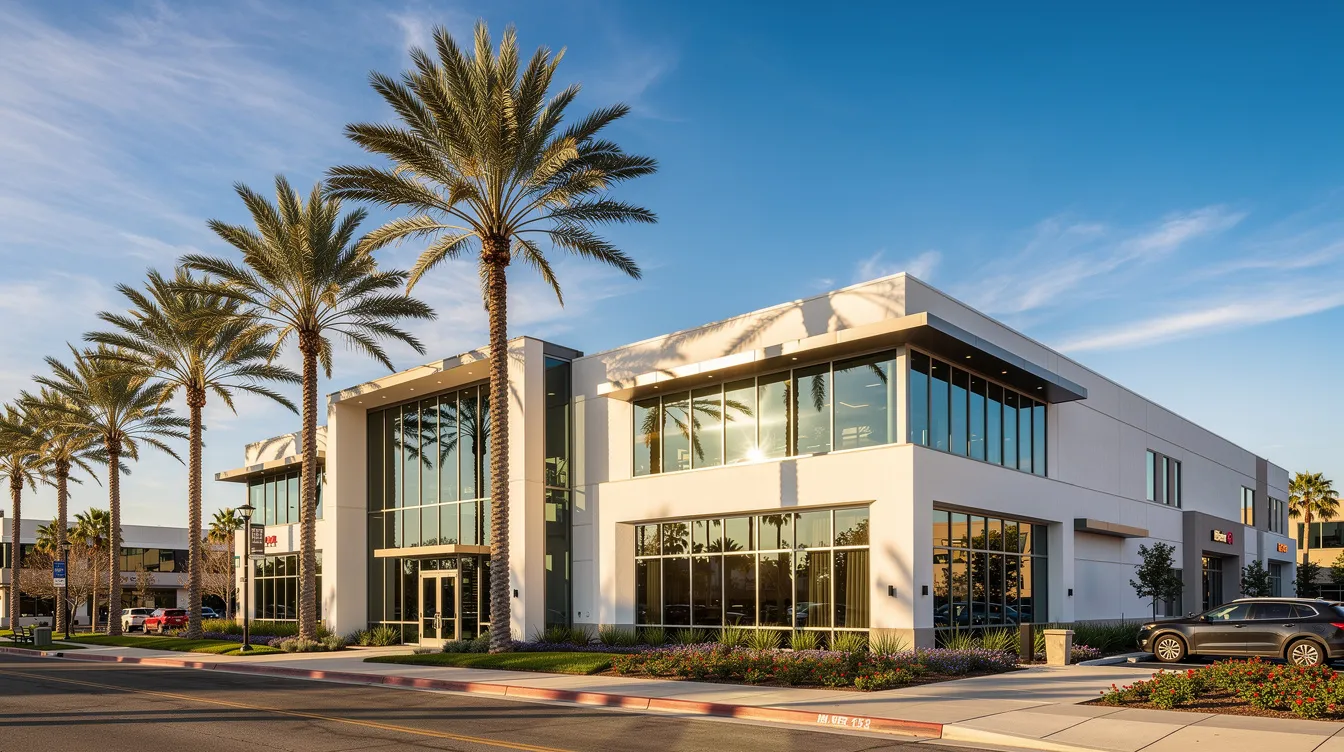
Broker Roles and Commission Splits in Commercial Real Estate Leasing
Most commercial lease transactions involve two brokers: the landlord’s listing broker and the tenant’s representative (tenant rep). The landlord generally pays leasing commissions in commercial real estate transactions through a listing agreement, and commissions are usually split between the landlord’s listing agent and the tenant’s representative. These specific terms are typically negotiated via a co-brokerage agreement.
Here’s how a split works in practice: a 10,000 square foot office lease in Newport Beach with a $1,000,000 total lease value and a 5% commission produces $50,000 in leasing commissions paid at closing. With a 50/50 split, each leasing agent receives $25,000. If the split is 60/40, the listing broker gets $30,000 and the tenant rep receives $20,000.
When a tenant comes directly to the listing broker, the broker may retain the entire commission. Some landlords use this to negotiate a lower overall cost. Total lease value, transaction complexity, and the number of agents involved all impact leasing commissions.
On lease renewals and expansions, commissions are typically paid at reduced rates – sometimes 1%–3% – since the marketing effort is minimal. This lowers the overall cost for landlords who successfully close renewals without a tenant rep in the lease agreement.
Renewals, Expansions, and Their Relationship to Tenant Improvements (TI/LC)
New leases, renewals, and expansions each carry distinct leasing commission and tenant improvement patterns. Owners model them differently in cash-flow projections, and the benefits of understanding each structure directly affect returns on a rental property.
- New leases: A new tenant in newly built or renovated space typically triggers the highest TI budgets and full market leasing commissions. Tenant improvements customize rental spaces for new tenants’ needs, and landlords often bear TI costs to attract tenants and stabilize occupancy across office properties.
- Lease renewals: Renewals typically command lower commissions than new leases due to reduced marketing effort – often 1%–3% of renewal term rent. Tenant improvement allowances incentivize tenants to sign or renew leases, though the scope may involve only minor changes or a cosmetic refresh rather than a full build-out.
- Expansions: When an existing tenant adds space, commissions apply only to incremental rent. For example, a tenant in a 20,000 square foot suite adds 5,000 square feet after three years. An Orange County owner might model a modest commission on the additional rent and a smaller TI per square foot than the initial build-out, since infrastructure is already established.
The cost of tenant improvements may be shared between landlord and tenant depending on renovations scope. Landlords view both LC and TI as leasing costs – a rich TI package can enhance overall value for individual tenants while allowing negotiation of slightly lower commissions. These strategies help retain tenants and attract potential tenants to the property, supporting long term tenants who contribute stable income.
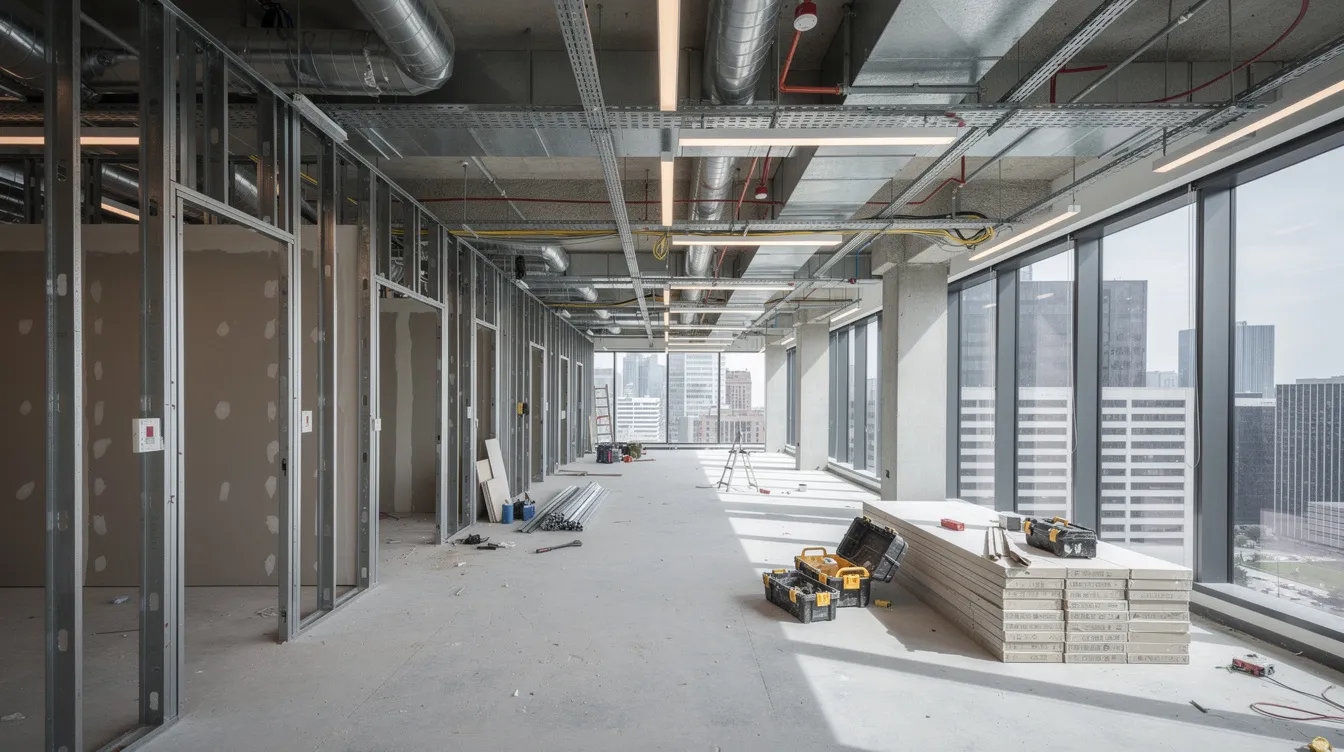
TI/LC: How Tenant Improvements and Leasing Commissions Work Together
Understanding TI and LC is crucial for effective lease negotiations. Here’s how the two connect from both a financial and construction perspective.
What tenant improvements include: Common examples of tenant improvements include changes to floors, walls, and ceilings, along with wall coverings, lighting, restrooms, hvac systems, fire safety equipment, updating security systems, security systems upgrades, and many other building elements tailored to a tenant’s specific needs. These building elements transform raw or outdated leased space into functional environments.
Tenant improvement allowance (TIA): This is the certain amount a landlord commits per square foot of leased space – for modern office space in Southern California, a ti allowance commonly ranges from $60–$120 per square foot for Class A and $35–$75 for Class B. A tenant improvement allowance helps control costs for landlords while making the space attractive. Negotiating tenant improvements can enhance property appeal, and tenant improvements can increase a property’s value and appeal – often leading to higher rental rates.
TI/LC as a combined budget: Owners and lenders underwrite ti lc tenant improvements together. When acquiring or financing commercial properties, lenders require TI/LC reserves consistent with market norms. TI/LC influences lease costs and property appeal simultaneously.
Full financial example: A 15,000 square foot office lease in Irvine at $4.00 per square foot per month for 7 years produces $5,040,000 in total base rent. At a $60 per square foot ti allowance, total TI equals $900,000. A 5% leasing commission yields $252,000 in LC. Combined ti lc cost: $1,152,000 – recouped through rent over the lease term.
From Ironside Building’s perspective, early collaboration between the leasing team, ownership, and the general contractor aligns TI scope with the available allowance. We help landlords and tenants value-engineer materials, layouts, and systems to keep total costs within pro forma targets while delivering workspaces that serve each tenant’s specific needs.
Landlords should negotiate TI allowances to manage improvement costs and avoid mid-project surprises that blow past the negotiated budget.
Frequently Asked Questions and Practical Tips on Leasing Commissions and TI
Who pays leasing commissions? Leasing commissions are paid by the property owner to brokers in nearly all U.S. commercial transactions. It is extremely rare for a tenant to pay commissions directly, though it can occur in sublease or off-market situations. Leasing commissions incentivize brokers to secure long-term tenants.
How are LC and TI treated for accounting? Both are usually capitalized and amortized over the lease term under GAAP. If a lease ends early, unamortized balances may be written off – creating additional costs or even contributing to loan default risk if reserves weren’t adequate. Understanding tenant improvements and LC accounting is essential; consult your CPA for specifics and confirm you have enough funds reserved.
What should Southern California owners budget? Ranges vary by property types:
- Class A office: TI $80–$120/sf, LC 4%–6% on new leases
- Retail/restaurant: TI $50–$150+/sf, LC 4%–6%
- Industrial: TI $5–$20/sf, LC lower or flat-fee
Practical negotiation tips for related questions owners commonly ask:
- Align lease term length with TI/LC cost spread – longer terms amortize high upfront costs.
- Clarify in writing what qualifies as TI versus base building work.
- Confirm when LC is payable (lease signing, occupancy, or commencement).
- Ensure construction schedules and commencement dates are realistic to avoid penalties.
At Ironside Building, we partner with landlords, tenants, and investors to deliver commercial build-outs on time and on budget. When you understand TI/LC up front, you avoid surprises during construction. Open chat with our team or reach out to start planning your next tenant improvement project with clarity, craftsmanship, and accountability.