Many commercial tenants lock in a commercial lease before scoping the build-out, then discover six-figure gaps in funding, schedule, or approvals they can no longer renegotiate. By the time construction starts, the tenant has zero leverage. This guide covers what to get in writing before you commit to a commercial space where substantial interior work is expected.
1. Start With the Build-Out in Mind, Not Just the Rent
Rent is one of the biggest business expenses for any tenant, but for many businesses planning a build-out, the lease agreement is a construction contract framework, not just a rent contract. Treating it otherwise is how business objectives get derailed before a single wall goes up.
Identify current and future space requirements before lease negotiations begin. Establish a budget before exploring lease options, and evaluate alternative properties against your company’s current operational model and growth plan. Commercial leases are complex and require legal expertise; the leasing process for a build-out-heavy deal is more involved than leasing a turnkey suite at your preferred location.
The three most common failure modes:
- Underfunded TI allowance: the headline number looks adequate, but excludes design fees, permits, or specialty systems, leaving the tenant short by tens of thousands.
- Vague landlord approval timelines: “reasonable approval” language stalls permit submissions and construction starts indefinitely.
- Unclear base building condition: the landlord claims HVAC capacity or electrical service is included; after demolition, the tenant discovers it is not, absorbing unexpected costs mid-project.
Any tenant planning a build-out should bring a licensed general contractor into the process before lease execution to validate build-out feasibility and cost against proposed lease terms.
2. Quantify the Tenant Improvement (TI) Allowance and Scope
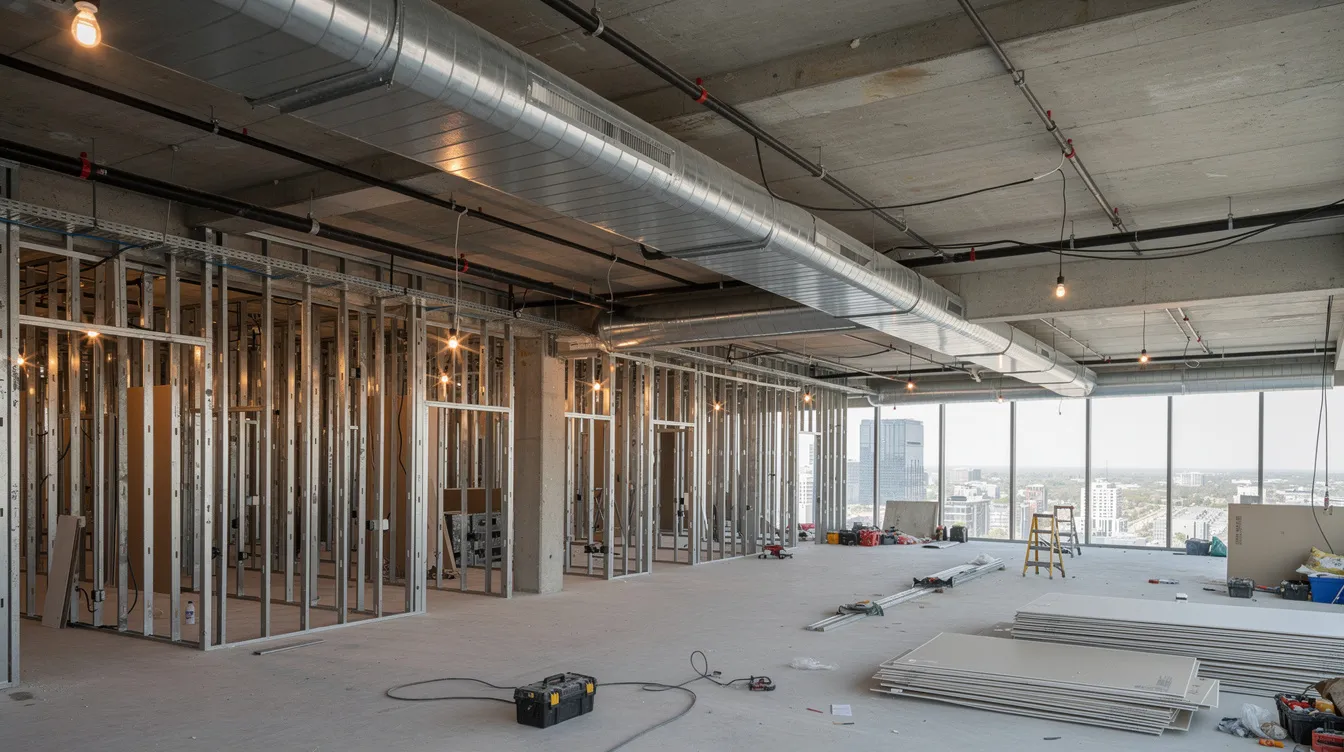
Tenant improvement allowances help offset renovation costs and are the single biggest financial driver on a build-out-heavy commercial lease. A new tenant entering first-generation space or a major reconfiguration will live or die by the TI structure. Maximize the tenant improvement allowance in lease negotiations by treating it as a construction budget, not a bonus.
A typical TI in many office deals is expressed as a dollar amount per rentable square footage, but the effective value depends on eligible costs and disbursement mechanics. For example, a $50/sf allowance on 10,000 sf equals $500,000. At 2026 SoCal pricing, mid-range office build-outs run $25 to $40/sf, so that allowance covers a standard fit-out. If finishes or MEP upgrades push the total cost to $55/sf, the tenant absorbs $50,000 out of pocket. Review all incidentals to ensure they fit within your budget before accepting the TI number.
Tenants should negotiate for tenant improvement allowances during lease talks with these specific asks:
- What is the exact TI allowance per usable and rentable square footage?
- Does the allowance cover design fees, permits, low-voltage cabling, furniture, and signage, or only hard construction costs? Negotiate for leasehold improvements to cover renovation costs broadly, not narrowly.
- Negotiate a cash allowance or a turnkey build-out funded by the landlord. A leasehold improvement clause can require landlord reimbursement for renovations; leasehold improvements clauses require landlords to reimburse renovation costs in defined categories.
- What documentation is required for reimbursement (paid invoices, lien releases, contractor affidavits)?
- What is the disbursement schedule, and who controls construction draws?
- Clarify ownership of improvements made during the lease term.
Landlords may finance tenant renovations over the lease duration, amortizing the TI into base rent. Understanding net effective rent aids in comparing lease costs across deals. In a gross rent lease, the landlord’s contribution may be embedded in the rent structure. In a percentage rent lease common at multi tenant retail locations, the TI structure often differs because the landlord ties concessions to projected gross sales. Under a net lease, operating expenses like property taxes, janitorial services, and snow removal sit with the tenant, which affects how much budget remains for the build-out.
Push for TI to cover change orders caused by base building issues discovered during demolition. Negotiate unused TI terms: can the balance apply toward lower rent, future work, or a rent reduction? Avoid “use it or lose it” structures. Shorter leases may cost more per square foot, so factor lease length into the TI equation. Landlords may finance part of your renovations over the lease duration as an alternative. A general contractor should prepare a preliminary build-out budget before the TI number is finalized. That covers base rent exposure and construction cost in one analysis.
3. Define Base Building Condition and Landlord Work in Detail
For any build-out, the line between base building and tenant work must be drawn in the key lease clauses, or the tenant pays to fix the property owner’s building. Define construction management responsibilities in lease terms to avoid confusion from day one. Specify the approval process for construction plans and contractor hiring so both sides know who controls what.
Require these items in writing:
- A written description of delivery condition (shell, warm shell, or second-generation space with existing improvements), with photos attached as an exhibit.
- Explicit landlord responsibility for electrical service, water, waste, and HVAC capacity to defined connection points. If the landlord pays for bringing these systems to the panel or suite entry, that must be stated.
- Confirmation of code-compliant fire life safety, ADA accessibility, and structural integrity before tenant work starts.
- Who pays to upgrade base systems if the build-out exceeds typical usage (server rooms, manufacturing equipment, lab exhaust).
Consider this scenario: a tenant leases second-generation space in Orange County, and after demolition discovers the main fire sprinkler riser is undersized for the new layout. The permit requires a new system. That cost and timeline were not in the TI budget, and the property management team claims it is the tenant’s problem. Without a written base building condition, the tenant has no recourse.
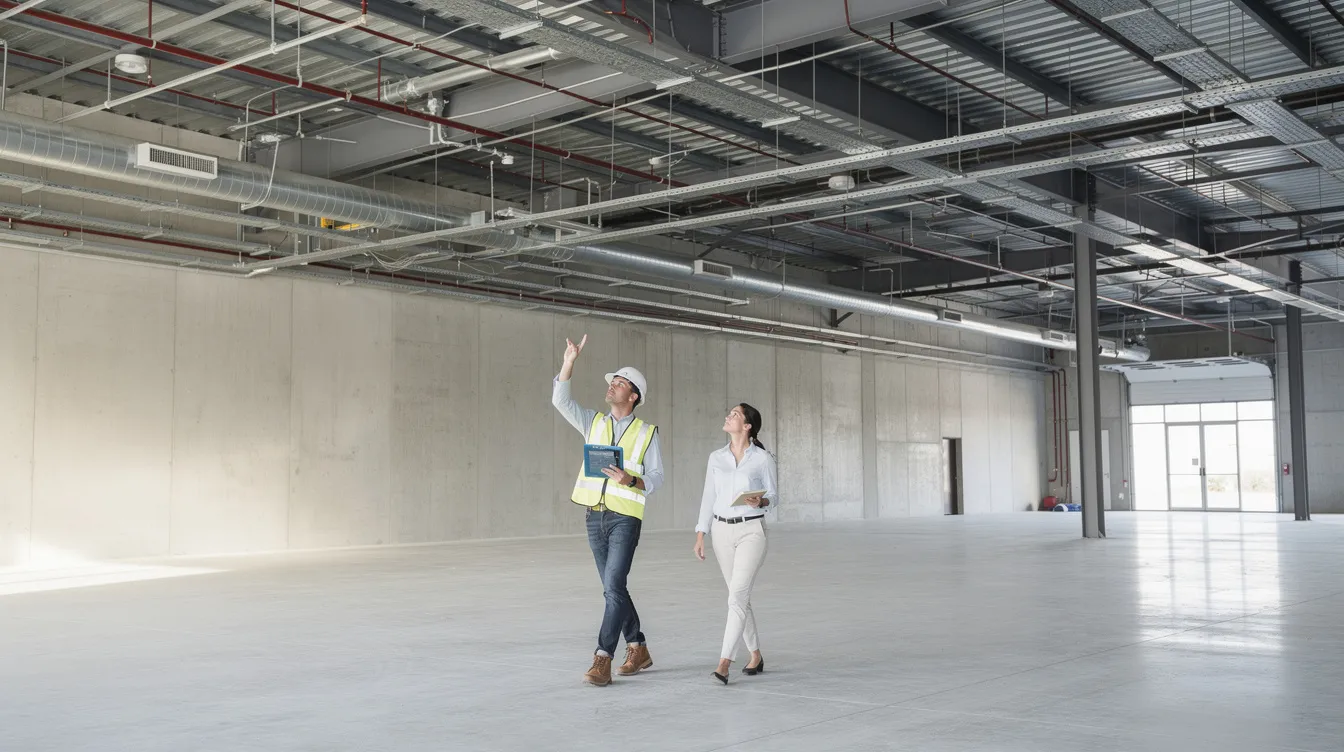
Walk the space with your contractor and MEP subs before lease execution. Document existing conditions with photos. Clear base building definitions also support smoother inspections and fewer change orders once construction starts.
4. Lock In Landlord Approvals, Permits, and Access Timelines
Delays on build-outs stem less from construction itself and more from slow landlord approvals, late premises delivery, or bottlenecks in permit sign-offs. Establish clear project timelines to ensure timely completion of construction. Most landlords control at least one step in the approval chain, and without deadlines, that step becomes the bottleneck.
The typical approval sequence: concept/test fit, construction documents, landlord review, city plan check, permit issuance, construction start. In Los Angeles, permit plan check alone often takes four to eight weeks depending on complexity. Build that reality into the lease.
Negotiate these lease terms:
- Fixed turnaround times for landlord review of plans (five to ten business days), with “deemed approved” language if no response by deadline. Vague landlord expectations like “as landlord sees fit” are red flags.
- Clear requirements for what must be submitted (drawings, specs, sealed engineer documents, contractor credentials) so approvals cannot stall on technicalities.
- Date and condition of premises delivery, including utilities on, contractor access, and completion of Landlord’s Work.
- Rights to early access for construction before rent starts. Landlords may offer two to three months rent free to cover this period. Negotiate for rent abatement during construction periods to save costs. Common incentives include free rent periods and move-in credits; tenants should always ask for inducements during negotiations. Seek tenant inducements tied to the build-out schedule, not arbitrary calendar dates.
- Defined remedies (rent reduction, pushed rent commencement) if landlord-caused delays extend the schedule.
A general contractor can produce a critical path schedule to benchmark whether the landlord’s proposed timelines are realistic and flag where float or contingencies are needed.
5. Clarify Permitted Use, Alteration Rights, and Competitor Clauses
Build-outs only add value if the commercial space can be used as intended. Over-restrictive permitted use or alteration provisions in a commercial lease can block operational needs after construction spend is locked in. As a business evolves, the lease must accommodate change without requiring landlord’s consent at every turn.
Negotiate these provisions:
- Broad permitted use language covering current operations and reasonable evolution of business needs without repeated landlord approval. A medical tenant needing imaging equipment, lead shielding, and medical gas plumbing must have these uses explicitly permitted. A restaurant tenant at a multi tenant retail location needing venting through the roof and grease interceptors must confirm lease and zoning allow both.
- Clear rights to non-structural changes, reconfigurations, and technology upgrades without separate approvals.
- Process and standards for structural changes, rooftop equipment, and heavy equipment anchoring.
- Signage rights: façade, monument, interior wayfinding, and parking spaces allocation integrated with the build-out design.
- A competitor clause preventing the landlord from leasing adjacent space to direct competitors. A competitor clause requires landlord consent to rent to competitors, protecting the tenant’s market position among other tenants at the property.
Negotiate expansion rights during initial lease agreement signing. Right of First Offer allows tenants to lease adjacent space first. Contraction rights let tenants reduce leased premises under defined conditions. Subleasing rights help tenants offset costs by renting unused space; subleasing can mitigate costs if sales decline. Flexible lease terms mitigate risks during business changes, so consider shorter lease terms if future needs are uncertain.
Renewal options allow tenants to extend their lease term. Negotiating renewal options can secure better rental rates, and renewal options can include rights to lease adjacent spaces. Tenants should negotiate renewal options during initial lease agreements to lock in lease options that protect long-term interests. A commercial real estate broker and land-use attorney can verify zoning compatibility while the contractor validates physical feasibility.
6. Allocate Restoration, Surrender, and End-of-Term Costs
Many commercial tenants focus on getting into the space and ignore what they must remove at the end. Limit restoration obligations to reduce end-of-lease costs for tenants; this is negotiated while you still have bargaining power, not at lease expiration.
Address these items in writing:
- Whether the tenant must restore the leased premises to shell, to prior condition, or leave improvements in good condition.
- How specialized or trade fixtures (fume hoods, mezzanines, vault rooms) are treated at lease end, including who pays for removal and patching.
- Requirements for removing cabling, low-voltage, supplemental HVAC, and data infrastructure.
- Whether the landlord can elect which improvements must be removed, with a defined notice deadline.
- How restoration intersects with relocation clauses or mid-lease modifications ordered by the landlord. Understand the financial implications before agreeing to open-ended restoration language.
Termination conditions specify how a lease can be ended. Some leases require paying remaining rent if terminated early. Review termination conditions to understand eviction triggers, because termination clauses outline actions that allow eviction by landlords.
One approach that works: the tenant negotiates “no restoration except for specified items listed in an exhibit,” capping exposure to a defined scope. Good documentation during construction (as-builts, photos, equipment lists) supports smoother exit negotiations; a disciplined contractor maintains these records throughout the project.
7. Structure Rent Commencement, Delay Protections, and Access Rights
The lease’s financial clock should not start before the space is ready. Tenants who accept rent start dates divorced from build-out readiness absorb costs with no revenue to offset them. Lease commencement, rent commencement, and possession or beneficial occupancy are three separate milestones. Each needs its own definition.
Negotiate these clauses:
- Rent commencement tied to the later of a fixed outside date or substantial completion of Landlord’s Work plus the agreed build-out period.
- Automatic extensions or rent abatements if the landlord delivers the premises late. Free rent periods should extend day-for-day with landlord delays.
- Early access rights for the tenant and contractor to begin work before the tenant must pay base rent, with insurance and coordination terms specified.
- Protections against landlord interference during construction: restricting noisy work hours without notice, limiting freight elevator access, or blocking loading zones.
- Force majeure vs. landlord-controlled delays, preserving tenant relief where the landlord or its agents are at fault.
Escalation clauses tie rent increases to the Consumer Price Index; negotiate caps on annual increases so rent escalation stays predictable over the lease duration. Escalation clauses can tie rent increases to the Consumer Price Index rather than arbitrary percentages, giving both parties a defensible benchmark.
Here is the dollar exposure: for a 10,000 sf space at $3/sf/month in base rent, a three-month mismatch between rent start and build-out completion costs $90,000. That is why these clauses matter.

8. Use Professional Advisors Strategically: Broker, Attorney, Contractor
Sophisticated landlords rely on experienced teams to negotiate a commercial lease effectively. Commercial tenants planning a build-out should match that with a coordinated trio: commercial real estate broker, commercial lease attorney, and general contractor. Accurate market intelligence strengthens tenant negotiation positions across every term.
Each role serves a distinct function:
- Broker: consulting a realtor provides up-to-date market lease rates. Research local market rents to inform negotiation strategies; researching local market rents informs better lease negotiations. Market research helps identify pricing inefficiencies in leases, and a broker frames where to push hardest on market rate, free rent, and tenant inducements. The broker’s market data and market conditions analysis give the tenant real bargaining power in any commercial lease negotiation.
- Attorney: involving a lawyer prevents unexpected lease costs. A lease attorney can identify mistakes in lease agreements. Reviewing lease terms with a lawyer avoids future disputes over personal guarantees, operating expenses, or restoration. Commercial real estate transactions require legal review of every clause.
- Contractor: tests the build-out concept against the actual building, producing cost and schedule benchmarks that inform TI, timing, and access negotiations.
How to coordinate them:
- Bring the contractor in once a short list of spaces is identified, before the letter of intent is finalized.
- Share preliminary test fits and program requirements with the contractor to stress-test TI allowance and base building capacity.
- Have the attorney and contractor review any work letter exhibit together so legal language matches construction realities.
- Use broker data plus contractor budgets to compare deals on a net effective cost basis, not just asking rental rates.
9. Red Flags, Quick-Reference Checklist, and Next Steps With Ironside
Pause before signing if a draft commercial lease for a build-out shows any of these red flags:
- No separate work letter or construction exhibit, or one that is vague and landlord-favored.
- TI allowance language with no disbursement schedule, documentation standards, or reimbursement timing.
- Broad “landlord’s reasonable discretion” on plan approvals with no response deadlines or deemed-approval mechanism.
- No mention of early access, or rent starting on a fixed calendar date regardless of construction readiness.
- Restoration clauses requiring full shell condition without reference to improvements actually constructed.
- No creative solutions for delay remedies or cost-sharing when base building issues surface.
Quick-reference checklist; confirm these are in writing before signing:
- TI amount, eligible costs, and disbursement schedule
- Base building condition and Landlord’s Work scope
- Landlord plan approval turnaround and deemed-approval deadlines
- Early access rights and rent commencement triggers
- Permitted use, alteration rights, and any competitor clause
- Restoration obligations with a defined exhibit of improvements
- Renewal options and expansion rights
- Termination conditions and any personal guarantees
Ironside, a full-service Southern California general contractor based in Irvine, reviews conceptual plans and draft lease work letters to test build-out feasibility before tenants commit. Our budget and schedule benchmarks de-risk commercial lease negotiation for tenants across Orange County, Los Angeles, and San Diego. We coordinate with your broker and attorney so that what the lease promises matches what construction will deliver, backed by disciplined documentation and meticulous project records.
If you are considering a new commercial property lease or a major renovation in Southern California, share your draft lease and preliminary plans with Ironside for a build-out feasibility review before you sign.
Build Your Vision with Ironside. Craftsmanship, disciplined documentation, and transparent project management on every build.