Why Construction Management Matters in 2026
The management of construction is a specialized discipline that goes well beyond generic project oversight. Construction management integrates architectural, engineering, and construction processes into a single coordinated effort aimed at delivering complex projects on time, on budget, and to clearly defined quality standards. For owners, developers, and investors overseeing commercial, multifamily, or high-end residential construction projects in heavily regulated markets like California, getting this right is not optional – it is the difference between a profitable asset and a costly liability.
Without disciplined construction project management, the numbers are unforgiving. Average cost overruns on commercial projects run around 20%. Schedule slippage of three to six months is common. Consider a 50,000 square foot office tenant improvement in Los Angeles: unclear scope definitions and poorly managed change orders can add months and hundreds of thousands of dollars before anyone realizes the baseline has eroded. Effective construction management requires planning, monitoring, collaboration, and communication – and its core aim is to minimize project risk and control costs at every stage.
This guide covers what owners need to know:
- How construction management differs from generic project management
- Roles of construction managers and project managers on the project team
- Major project delivery methods and contract structures
- Core processes from the design phase through completion
- Risk management strategies that protect capital
- Technology, education, and best practices for reducing surprises across the entire project
The focus throughout is on owner-side clarity, craftsmanship in execution, and accountable construction management from planning through closeout.
What Is Construction Management and How It Differs from Generic Project Management
Construction management is a discipline that combines standard project management methodologies with deep knowledge of construction methods, building codes, trade sequencing, and jobsite realities. All construction management is project management – but it operates under constraints that generic project management never encounters.
Where an IT project manager might manage scope, timeline, and budget for a software rollout, a construction manager delivering a 150-unit multifamily building in Los Angeles must simultaneously navigate Title 24 energy compliance, seismic engineering requirements, city inspections, weather delays, and the physical coordination of dozens of trades on a single site. The construction process demands tools and workflows built specifically for this complexity.
Key distinctions include:
- Specialized tools: CPM scheduling (the critical path method), pay applications, RFIs, submittals, and three-week look-ahead schedules replace generic task boards
- Expanded objectives: scope, cost, schedule, quality, and safety – not just the classic project management triangle
- Full life-cycle span: feasibility, preconstruction, procurement, the construction phase, commissioning, and post-occupancy
- Physical risk: site conditions, safety incidents, material logistics, and weather are constant variables
- Real-time documentation: modern construction project management relies on cloud-based capital project management software to track budgets, RFIs, daily field reports, and schedule updates in real time
Construction managers plan and supervise construction projects, coordinate contractor activities and manage project schedules, and oversee project budgets and quality management – responsibilities that demand both technical depth and field experience.
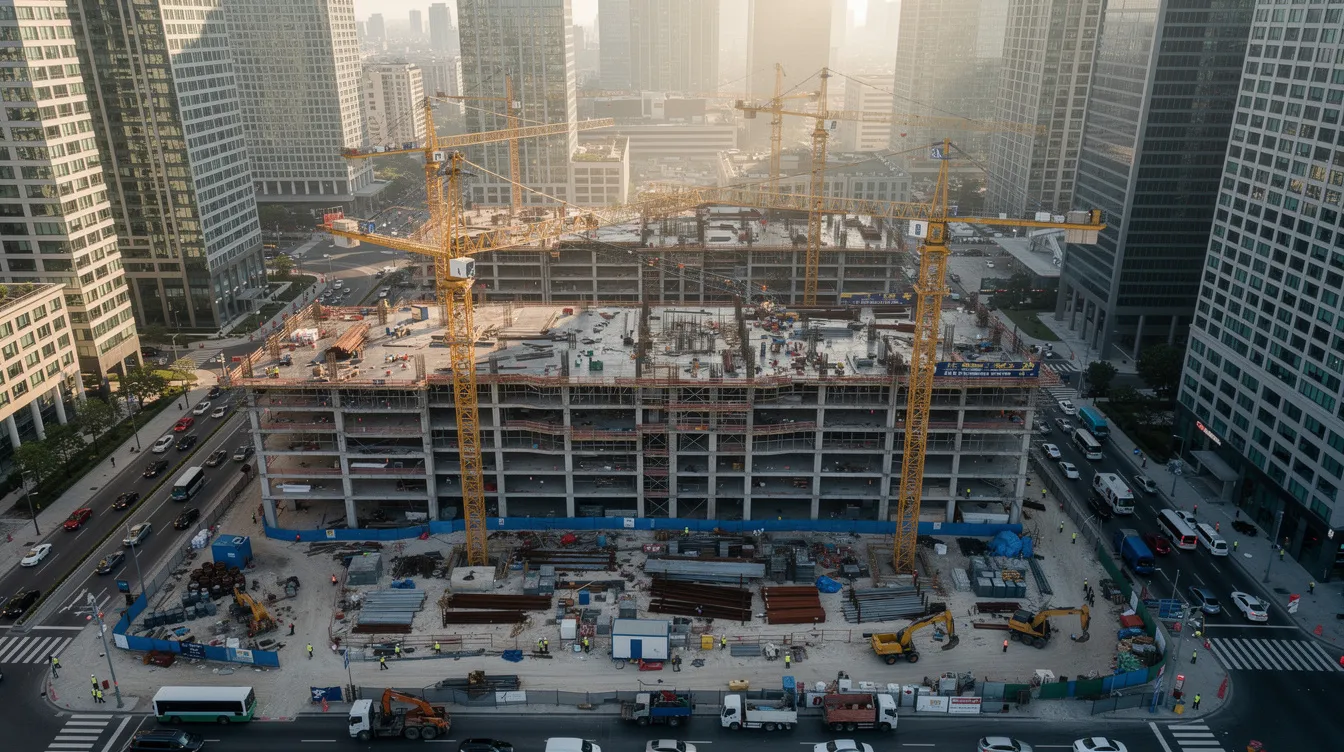
Roles and Responsibilities: Construction Manager, Project Manager, and the Owner
Clear roles and responsibilities should be defined to ensure accountability in project management. On construction projects, three roles are frequently conflated – and understanding their distinctions matters for every owner writing checks.
The construction manager’s core responsibilities include planning, scheduling, cost control, contract administration, coordination of trades, quality control, and safety oversight on active construction projects. Construction managers face unpredictable project conditions daily – from field conflicts between mechanical and structural trades to weather delays – and must comply with complex regulations including California’s Title 24 and local seismic standards. Human resources management involves workforce planning and subcontractor coordination, ensuring the right workers are on site at the right time.
An owner-side construction manager acts as the owner’s representative: interpreting contract documents and drawings, reviewing submittals, tracking RFIs, validating pay applications, and flagging scope creep early. A contractor’s project manager, by contrast, represents the general contractor’s interests – managing the contractor’s budget, labor, and subcontractors. A third-party program manager may oversee multiple projects across a portfolio.
Day-to-day, a capable CM runs weekly OAC meetings, issues meeting minutes, monitors progress against the critical path, updates the three-week look-ahead schedule, and resolves field conflicts. Effective communication and coordination involve regular site meetings and maintaining clear documentation – the backbone of dispute prevention.
Construction Manager vs. Project Manager – In practical terms, project managers often handle broader business and administrative coordination while construction managers bring field-specific expertise: reading structural drawings, evaluating means and methods, and managing the physical construction activities on site. On many mid-size projects, one person fills both roles. On larger or complex projects, the responsibilities are split deliberately.
The owner’s responsibilities are equally critical: timely decisions, clear project goals, secured financing, and change order approvals within defined timeframes. Delays in owner decisions cascade directly into the project’s schedule.
Project Delivery Methods and the Construction Manager’s Role
Choosing among project delivery methods is one of the most consequential decisions an owner makes. Each method allocates risk, responsibility, and decision-making authority differently among the owner, designer, and contractor.
Design–Bid–Build (DBB): The traditional approach – design is completed first, then competitively bid. The owner benefits from price competition but bears risk for design errors and schedule length. Lump-sum bid contracts are the most common construction contracts in this model.
Construction Manager as Agent (CMa): The CM holds no trade contracts. Instead, the CM advises the owner from concept through completion, focusing on planning, scheduling, procurement recommendations, and oversight. This is a professional service relationship – the CM acts as the owner’s expert extension.
Construction Manager at Risk (CMAR): The CM is brought in early to provide preconstruction services during design stages, then delivers construction under a guaranteed maximum price contract. Guaranteed maximum price contracts limit project costs for owners while allowing the CM to manage design development input and trade procurement. This method balances early contractor input with cost certainty.
Design–Build (DB): Design-build contracts combine design and construction under one contract, providing a single point of responsibility. Faster timelines are possible, but owners give up some design control.
Integrated Project Delivery (IPD): Shared risk and reward among owner, designer, and builder. Best suited for complex projects requiring deep collaboration, BIM integration, and schedule compression.
Other contract types owners encounter include cost-plus-fee contracts, which require owners to pay all project costs plus a fee; unit-price contracts, which pay for actual measured quantities of work; and multiple prime contracts, which involve separate contracts for different trades.
Practical impact: A tenant improvement on a 12-week schedule may work well under DBB with a strong general contractor. A 30-month ground-up multifamily development in Los Angeles – where design changes are expected and permitting is unpredictable – often benefits from CMAR’s early collaboration and cost visibility. Project delivery speed, cost certainty, and flexibility for design changes all shift based on the method selected.
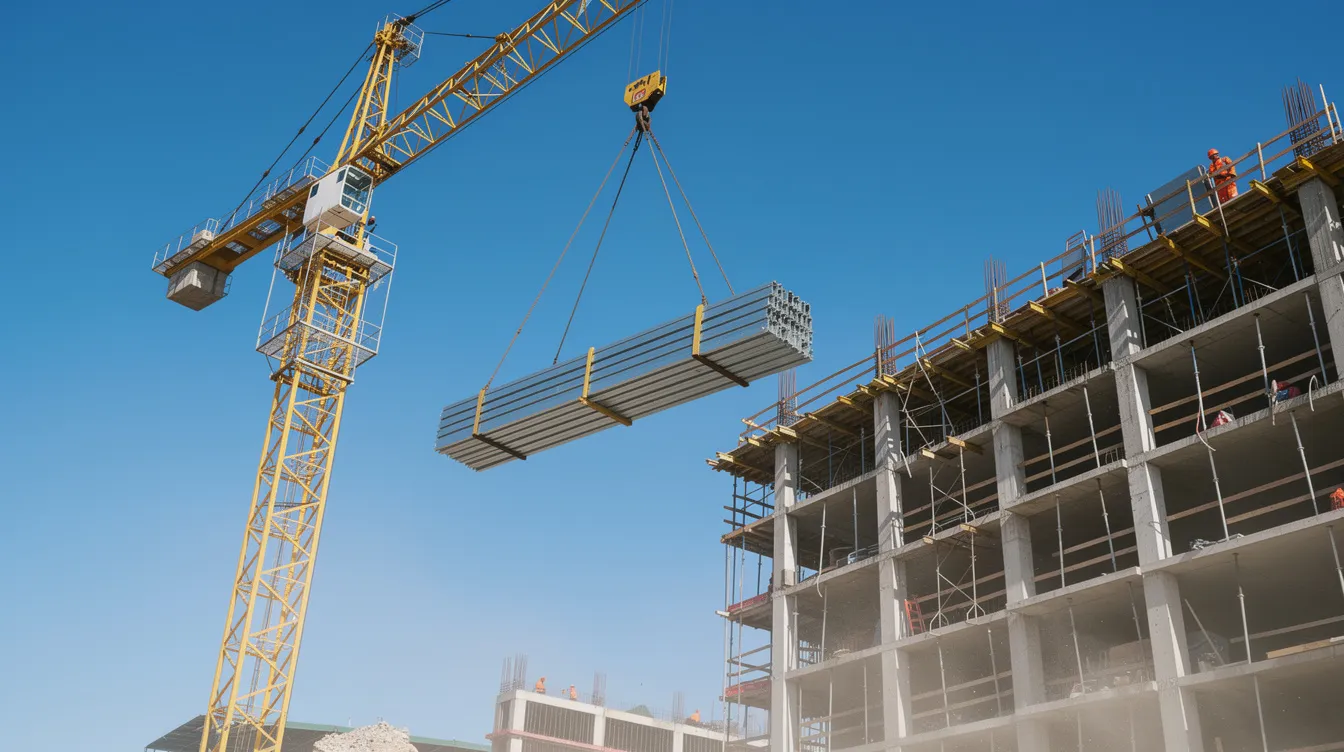
Core Processes in Construction Project Management
Creating a comprehensive construction management plan includes five phases: initiation, planning, launch, performance, and closure. Each phase builds on the last, and skipping steps in early phases almost always creates problems during the construction phase.
Planning – The construction manager leads development of the work breakdown structure, baseline schedule using the critical path method, baseline budget, site logistics plan, safety plan, and quality management plan. Accurate cost estimation involves creating a detailed budget covering labor, materials, equipment, and overhead. Budgeting and cost control are crucial in construction management to keep projects within budget.
Documentation – Effective document control is necessary for managing technical documents and ensuring teams have the latest information. Documentation of daily reports, project changes, and site conditions helps prevent disputes and supports legal protection. Key documents include RFIs, submittals, meeting minutes, change order logs, punch lists, and closeout packages.
Material and equipment management – Material management ensures timely procurement and delivery of materials to avoid on-site inventory costs. Scheduling maintenance for equipment minimizes downtime and ensures availability – particularly critical on projects with tight schedules.
Quality and compliance – Quality control ensures work complies with project specifications and building codes. On California projects, this includes Title 24 energy compliance checkpoints and seismic inspections.
Software and workflows – Standardized digital workflows help ensure construction projects finish on time and within budget. Construction managers and project managers use centralized construction management software to track all documents, monitor performance, and coordinate dispersed teams.
Example: On an occupied office building in downtown Los Angeles, a CM developed a detailed phasing plan to sequence construction activities floor by floor, maintaining clear approval processes with 48–72 hour RFI response deadlines. This prevented cascading schedule delays and minimized tenant complaints. Effective construction project management relies on planning, communication, and proactive risk management at every step of the construction process.
Risk Management in Construction Projects
Risk management involves identifying, analyzing, and mitigating potential issues before they escalate – and it should continue throughout the project to adapt to changes. On construction projects, risk is not theoretical. It is measured in dollars and days.
Common risk categories include:
- Design incompleteness: Incomplete drawings generate RFIs, field conflicts, and rework. Rework alone costs 4–10% of total project cost on typical building projects – on a $50 million project, that is $2.5 to $5 million lost
- Permitting delays: In SoCal, planning and permits often take longer than construction itself, with West Coast projects spending 3–4 months more in planning
- Material and labor volatility: Steel, curtain wall, and specialty systems remain unpredictable due to tariffs and supply chain disruption
- Scope changes: LAUSD data shows $23 million in change order costs across evaluated projects, with 55% from course-of-construction scope additions
Establishing a clear scope of work helps to avoid scope creep. Implementing a formal change management system helps in preventing budget overruns. Effective risk management practices can mitigate construction issues before they compound.
Practical tools include risk registers, contingency budgets, schedule float analysis, and early procurement strategies for long-lead items like switchgear and curtain wall systems. Constructability reviews should be conducted by experienced field experts to identify potential issues early – ideally during the design phase, not after permits are issued.
Comprehensive safety protocols should be established and enforced as a top priority on every site. Conducting safety briefings and risk assessments enhances health and safety management on-site, protecting both workers and the owner’s liability exposure.
Example: Discovery of contaminated soil on a 2025 multifamily project in Orange County triggered a remediation scope that could have added four months and $1.2 million. Because the CM had identified soil risk during feasibility and carried an environmental contingency, the team mobilized remediation within two weeks – limiting the delay to three weeks and staying within budget.
Contract language and alignment of expectations at project start remain among the most effective risk management tools for both owners and construction managers.
Building and Leading the Construction Project Team
A construction project team typically includes the owner or developer, architects, engineers, construction manager, general contractor, subcontractors, lenders, and key stakeholders such as tenants, neighbors, and city agencies. Communication barriers can hinder large construction projects, making deliberate team structure essential.
Consistent communication channels help to avoid delays in construction projects. Construction managers facilitate collaboration through:
- Weekly OAC coordination meetings with clear agendas and documented action items
- Pull-planning sessions with trades to sequence work and identify constraints
- Transparent reporting dashboards for owners and lenders showing cost, schedule, and risk status
- Decision calendars and escalation protocols that prevent critical path delays when owner or design team input is needed
Centralized construction management software can align team members and subcontractors, giving everyone shared access to current drawings, RFIs, daily logs, and punch lists. This enables real-time coordination even when participants are geographically dispersed across multiple projects.
Example: On a 100,000 square foot office build-out in Irvine, a structured project team with standing biweekly owner reviews, weekly trade coordination meetings, and a cloud-based document platform reduced RFI turnaround to 48 hours and kept rework below 2% of contract value – well below the industry average.
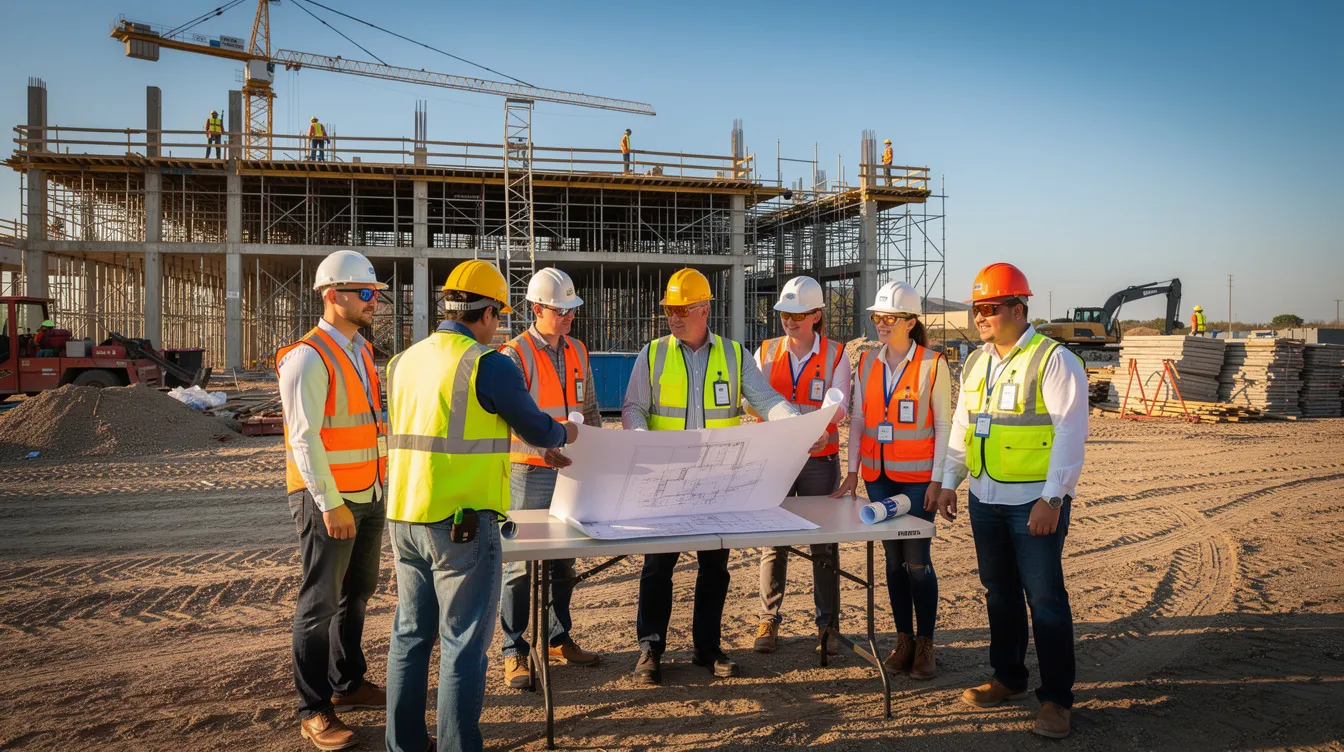
Technology and Data in Modern Construction Management
Construction technology has fundamentally changed how project teams operate. Digital tools now span the entire project – from 4D/5D BIM for sequencing and cost visualization, to cloud-based project management systems, to mobile field apps capturing real-time data on a single project or across a portfolio.
Construction management software helps manage project complexities that were previously tracked on spreadsheets and paper logs. Key functionalities include budget tracking, change order workflows, submittal logs, punch lists, and analytics that flag emerging risks. Key Performance Indicators (KPIs) should be used to track costs and progress in real time, and measuring productivity, costs, and schedule performance helps improve decision-making at every level.
Owners in 2024–2026 increasingly expect real-time project data: weekly progress snapshots, photo documentation, and variance reports against the guaranteed maximum price or baseline budget. This transparency is no longer a luxury – lenders require it, and industry experts recognize it as standard practice on professionally managed construction projects.
Example: On a complex MEP-intensive healthcare project, clash detection in BIM during the design phase identified 47 mechanical-structural conflicts before permitting. Resolving these digitally – rather than discovering them in the field – avoided an estimated $800,000 in rework and three weeks of schedule delay.
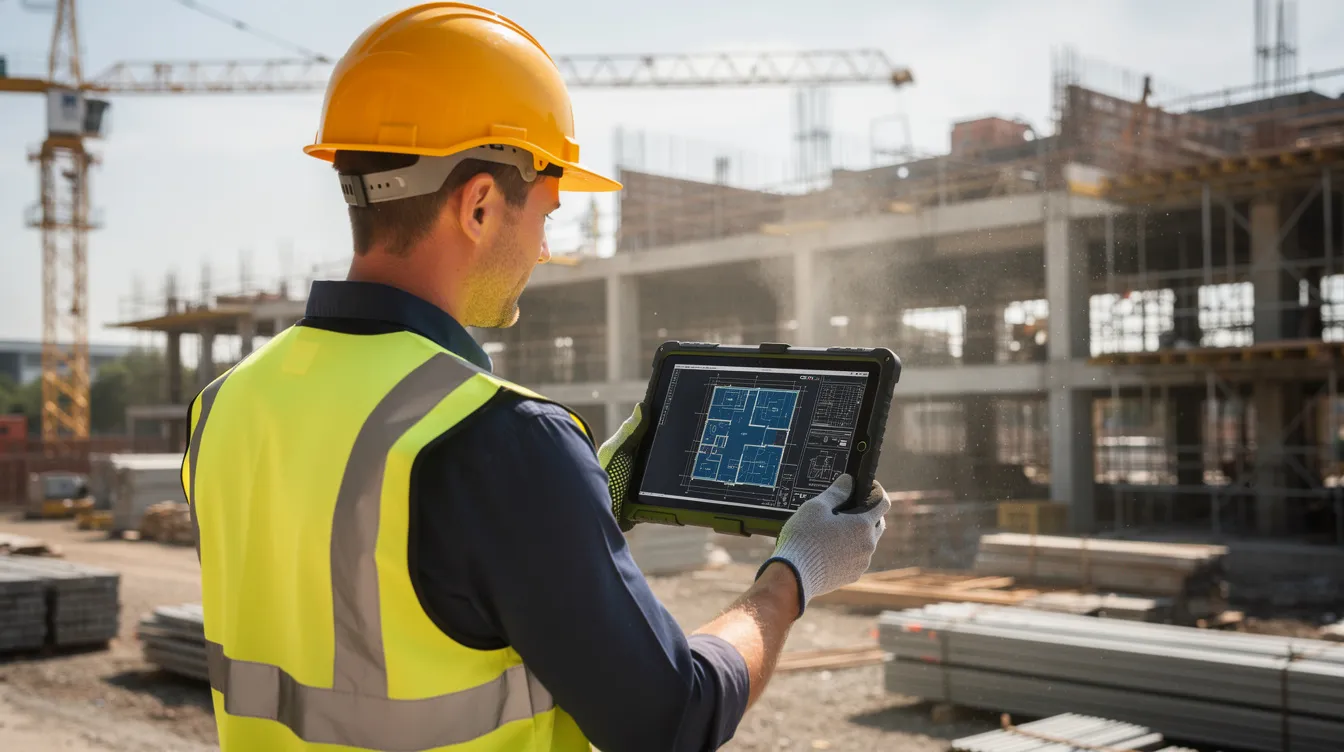
Education, Skills, and Career Path of Construction Managers
Construction managers typically need a bachelor’s degree in a related field – commonly construction management, civil engineering, or architecture. Many programs carry accreditation from bodies like the American Council for Construction Education (ACCE) or ABET. Construction management education includes project management and construction methods coursework, along with estimating, scheduling, contracts and construction law, safety, and project controls. A construction management degree or construction management program from an accredited institution builds the solid foundation that field experience extends. Professional certification from organizations like CMAA further differentiates senior practitioners.
The blend of skills required is distinctive: reading drawings and specifications, cost analysis, negotiation, leadership of onsite teams, and effective communication with both field crews and executive stakeholders. A field engineer early in their career may assist with submittals and daily reports; a senior construction manager or director of construction oversees entire project portfolios.
Labor market context reinforces the value of this expertise. The median annual wage for construction managers was $106,980 in 2024, with top earners exceeding $189,000. Employment of construction managers is projected to grow 9% from 2024 to 2034 – strong job growth by any measure. With 520,900 construction manager jobs reported in 2023, the construction industry continues to expand demand for qualified professionals. In Southern California, compensation runs well above national medians, reflecting the complexity of local regulations, seismic requirements, and high-cost development.
For owners, this data underscores a practical point: the caliber of construction managers leading your multimillion-dollar project directly correlates with project success. Training, construction education, courses in relevant curriculum, and demonstrated field experience are non-negotiable qualifications.
Best Practices for Owners: Managing Construction with Fewer Surprises
Owners who develop disciplined habits around construction oversight consistently see better outcomes. Here is a concise playbook:
- Define scope early and completely. A clear project brief with written goals, priorities, and constraints prevents the scope drift that generates costly change orders
- Engage a construction manager early. Involving a CM during site selection or schematic design – not after construction documents are issued – improves constructability, cost accuracy, and schedule feasibility
- Set realistic contingencies. For ground-up commercial or multifamily in SoCal, 5–10% contingency on hard costs is prudent given average cost overruns near 20%
- Establish formal governance. Decision rights matrix, change order approval thresholds, and standing weekly or biweekly project review meetings with clear agendas keep progress on track
- Demand transparent reporting. Monthly cost reports, schedule updates, risk registers, and issue logs allow owners to see problems forming before they become crises
- Select the right CM. Look for a track record with similar project types, local regulatory experience, and a culture of craftsmanship, transparency, and accountability – not just the lowest fee
Construction management services should feel like a partnership, not a transaction. The right CM brings strategies, knowledge, and programs that protect an owner’s business interests across every aspect of development – from feasibility through completion.
Conclusion: Aligning Vision, Risk, and Execution in Construction Management
Effective management of construction aligns an owner’s vision with realistic budgets, timelines, and risk profiles through disciplined project management and experienced construction managers. The themes are consistent: choose the right project delivery method, empower a capable construction manager, invest in planning and risk management, and use technology and clear team structures to avoid surprises.
When construction management is done well – with the right skills, tools, and accountability – projects finish closer to their expected budget, with fewer disputes and a smoother transition to operations or occupancy. As regulatory complexity, evolving construction technology, and investor expectations continue to intensify through 2030 and beyond, professional construction project management will only grow more indispensable.
The owners who build lasting assets are those who invest in clarity, craftsmanship, and accountable construction management from day one. Build your vision on a solid foundation.